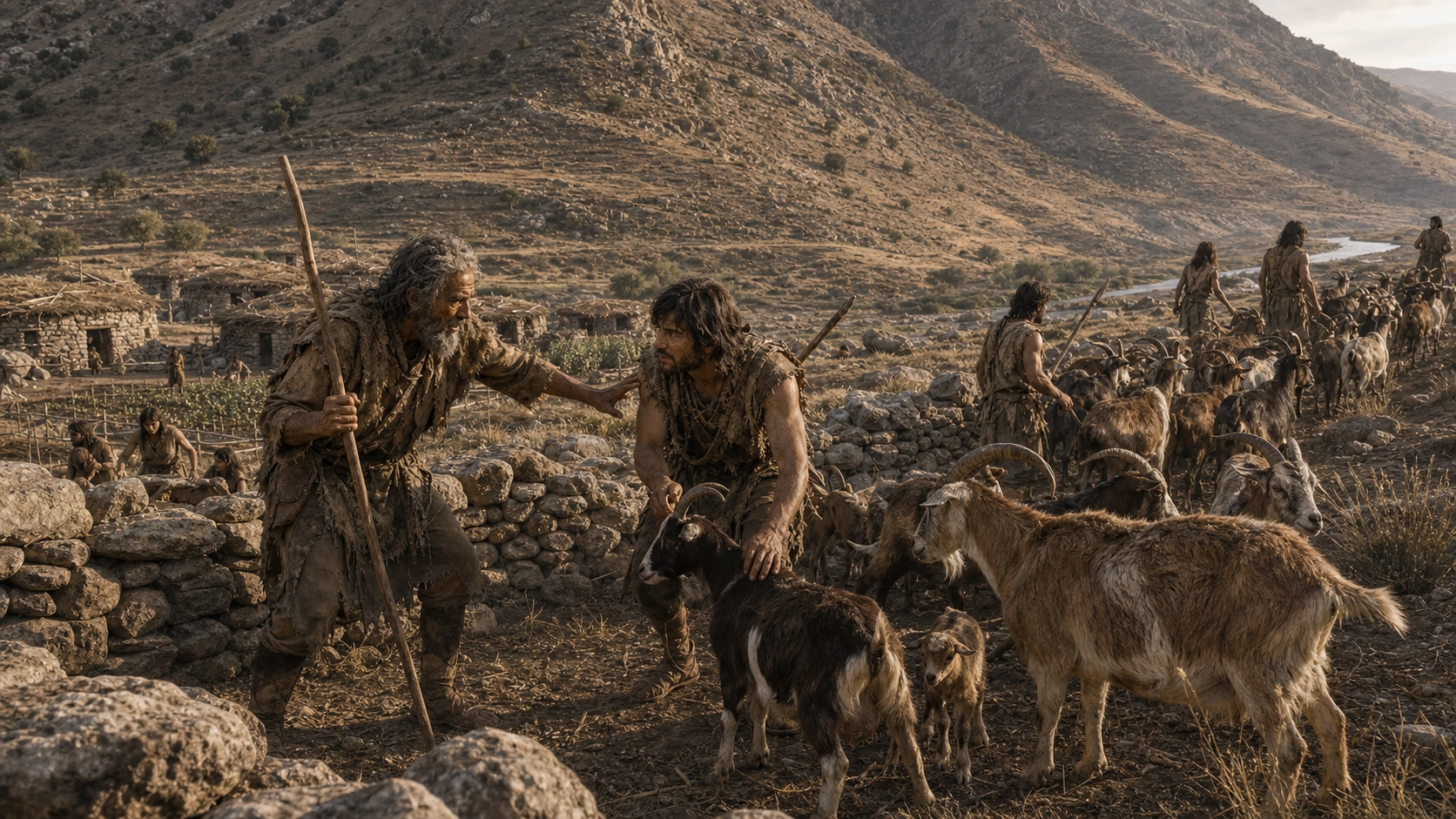
I tried to kill a goat and got smacked across the back of my hand.
Just before my blade touched its throat, a dry stick came down on my hand. It belonged to the old man who looked after the village’s goats.
“Kill a male.”
“This one is bigger.”
I pointed to a female with a swollen belly. Winter was nearly over, and everyone had grown thin. She looked like the best-fed animal in the herd.
The old man pointed his stick at her belly.
“That is exactly why you leave her alone. She isn’t one goat.”
“Looks like one to me.”
“Count what’s inside her too.”
In the end, we killed a smaller young male that day. There was less meat to share than I had expected. Even as I scraped the last bits of meat from a bone, I could not understand the old man’s choice.
It seemed that people who were hungry now had to eat less for the sake of kids that had not even been born.
By then, we no longer chased and killed every goat we found in the mountains. When herds came close to people, we watched where they moved and kept the females and young from scattering too far. The goats still avoided us and jumped the stone walls whenever they got the chance. At least they no longer vanished over the mountains before the next hunt.
Whenever the old man looked at a goat, he studied its legs and belly. He knew which females were carrying young, which males were still too young, and which kids had fallen behind without their mothers.
“How can you tell them all apart?”
“If you see prey, they are all meat. If you see a herd, every animal is different.”
When spring came, the females he had spared began giving birth. A thin-legged kid stood beside a goat that had been alone the day before. A few days later, another kid’s cries came from inside the stone enclosure.
Only then did I understand what the old man had told me to count.
After that, we changed the way we chose which goats to kill. Males that charged the stone wall whenever they saw a person were taken first. Males that followed the herd calmly were allowed to live. We also kept females that gave birth often and raised their young well for longer.
Doing this once or twice did not immediately change what goats looked like. But people repeated similar choices every season. Over time, more of the goats in the village herd were born with traits that made it easier for them to live near people.
We did not change the body of any one goat with our hands. Instead, we kept deciding which goats would live long enough to reproduce. As those choices accumulated over many generations, the herd gradually changed.
To a hunter, a goat was meat that disappeared once it was eaten. Once people began keeping herds, however, a female spared today could give birth the following year. Humans began deciding not only which animals to kill, but also which ones would live and reproduce.
Of course, sparing goats did not make the herd grow by itself.
Grain stored in a jar did not cry out to be fed. Goats needed grass and water every day, and every night they searched for a way out. One kid died from illness. Two escaped through a collapsed section of wall. On a night when wolves came down from the mountain, we lost a female.
Losing one female did not mean losing only one animal’s worth of meat. It also meant losing every kid she might have produced.
As the herd grew, so did the amount of meat it could provide. But we also had to find more water and grass, separate sick animals, and protect the herd from wolves and thieves.
Livestock could reproduce and increase in number. But without people to provide water, find pasture, and protect them, the animals could fall ill, die, or escape. Humans gained living wealth, but they also took on the daily burden of keeping it alive.
Our days began to follow the goats’ needs. Even when people wanted to leave on a hunt, someone had to stay behind with the herd. Even when we wanted to rest, the scattered goats had to be gathered before sunset.
We thought we were keeping the goats from leaving. Before long, caring for them also kept us from doing whatever we wanted.
As summer dragged on, the grass around the village ran out first. The grain in our jars was difficult to move, but the goats could walk. We packed food for several days and drove the herd toward a mountainside where water and grass remained. Some people stayed in the village to protect the fields and houses. The rest moved with the goats.
The man sitting closest to me asked a question.
“Yesterday, you said farming made people stay near their fields. But raising livestock let them move again.”
“That is right. The beginning of agriculture did not make everyone settle permanently in one place.”
At that time, goats mainly provided meat and hides. Much later, people learned to take milk and wool without killing the animals. Larger livestock carried loads and supplied the strength to plow fields.
A single animal was no longer worth only one meal. While it lived, it could provide food and useful materials many times, then leave young behind as well.
Farmers had to remain close to their fields. Herders, however, could move with their animals in search of grass and water. Animal domestication opened a new way of life in which people could take their food and wealth with them.
That summer, the grain remained in jars back at the village.
The goats climbed the mountain with us toward the water.
Human food no longer only grew from the ground. Some of it could walk and give birth.