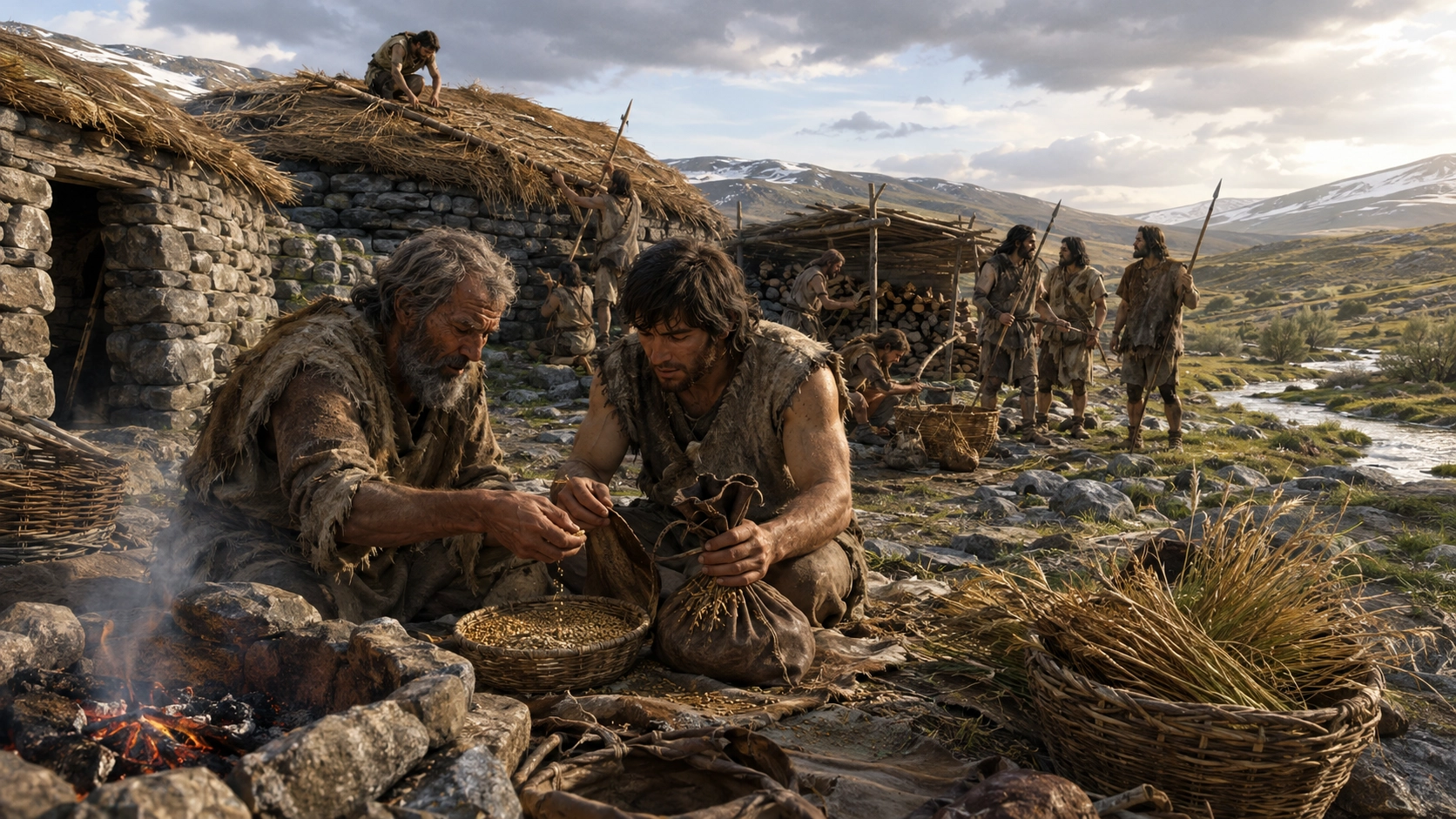
I trusted spring and went hungry three times.
“Can spring lie?”
The youngest child asked.
“It can turn warm enough for you to sow seeds, then freeze again. Or rain just long enough to reassure you, then stop for far too long.”
The first time, warm winds blew for several days. New shoots rose between the grasses, and migratory birds returned. People thought the long cold spell was over. We even sowed seeds we could have eaten and waited for them to sprout.
About ten days later, the cold wind returned. Ice formed again on shallow water, and the new shoots blackened and died. The seeds in the ground could no longer be dug up and eaten.
The second time, rain came early and then stopped for far too long. The third time, heavy rain fell just before the grain ripened and changed the course of the water. A method that had worked before could still fail the next time.
Much later, people would call the long cold period around that time the Younger Dryas. We had no such name for it. We knew only that a few warm days did not mean the cold was over, and that sowing at the same time as the year before did not guarantee the same result.
So when warm winds began blowing again, I was not quick to trust them.
At the time, I was staying in a village between low hills and a watercourse. People gathered wild barley and other grass seeds, then sowed some in the ground close to the village. But no one could yet rely on the harvest to survive the year. If game grew scarce and we missed the gathering season, we had to eat even the seed we had saved.
One day, the young man in charge of the seed came to me carrying a hide pouch.
“Are we sowing again?”
“Only half.”
“You said spring was back.”
“Trusting those words has left me hungry three times.”
We sowed half the seed and kept the rest for food. We did not use all the dry wood, in case the cold returned. The hunters went out in search of food as usual instead of trusting the grain alone. If the crop failed again, we wanted to make sure that not everyone starved.
That year, the rain did not come on the days we wanted. There were cold spells, and strong winds flattened some of the young shoots. But the cold and dry weather did not last long enough to overturn the entire season. The grain that survived ripened before the warm part of the year ended.
One harvest was not enough to make anyone trust the weather. The important change appeared in the years that followed.
The rain fell on different days, but the rainy season came at roughly the same time. Wild barley ripened and gazelles passed through at about the same points in the season as they had the year before. The following year was different too, but not enough to make us abandon everything we had prepared.
By the third year, the young man repaired the roof before the rain arrived. Hunters chose routes that would bring them back when the grain ripened. People mended their baskets before the season when fruit grew plentiful.
In the past, we had acted only after cold or rain arrived. Now we could use the pattern of the past few years to prepare what we needed before the next season began.
A stable climate did not mean that rain fell on the same day every year or that the same amount of grain always grew. Droughts, floods, and cold spells continued. But the seasons followed a more consistent order, and extreme swings became less common. People could use what they had learned one year in the next. They began preparing months ahead—repairing roofs before the rain and timing hunts around the harvest.
The same change appeared in the promises people made.
“I’ll be back before the next rain.”
“When the grain ripens, let’s meet up with our group again.”
“We won’t eat the seed we saved until the cold days are over.”
When the seasons could turn without warning, it was difficult to keep promises tied to a certain time. But once rain and warmth began returning in a similar order, people could decide when to meet months later and what they would do together.
Humans had been able to think about the next season for a very long time. The problem was that sudden changes in the weather made long-term plans fail. Once the seasons began repeating in a more regular way, saving seed, repairing homes, and promising work months ahead were more likely to pay off. A stable climate did not create agriculture by itself, but it made depending on planted seed for a year’s food far less dangerous.
By the time I finished, the sunlight along the top of the wall was almost gone. The children, noisy only moments earlier, glanced toward the darkening lane.
Someone called their names from a distance. One voice was soon joined by calls from other houses.
“Do we have to go already?”
The youngest child looked disappointed. The teenage girl—his big sister—checked her phone and stood.
“Already? You mean finally. Everyone back home is looking for you.”
The children reluctantly brushed the dirt from their clothes and got to their feet.
“What’s the next story?”
“Farming.”
“But you already talked about sowing seeds.”
“Trying a few seeds is not the same as deciding to get a whole year’s food from that field.”
The youngest child’s eyes lit up at once.
“Then I’ll come back tomorrow.”
“I never invited you.”
“You never told us not to come.”
The children laughed and ran down the lane. The teenage girl hurried them along, but she was the last to leave. She looked back at me once before following them.
Soon, the only things left beneath the wall were the marks where the children had been sitting.
The next story was not about experimenting with a few handfuls of seed.
It was about villages beginning to depend on fields for a year’s food and devote a year’s labor to them.